A healthy, solid jawbone is essential for supporting dental implants. However, after a tooth is lost or extracted, the surrounding bone can gradually shrink—especially in areas where the bone is naturally thin, such as the front teeth or upper jaw. If there isn’t enough bone to anchor an implant securely, a bone graft can be performed to rebuild the area and create a strong, stable foundation.
In many cases, bone grafting is done immediately after tooth extraction to preserve the natural ridge and maintain proper shape for future implant placement. When teeth have been missing for several years and bone loss has already occurred, a graft can often be placed to restore volume and strength before the implant is added.
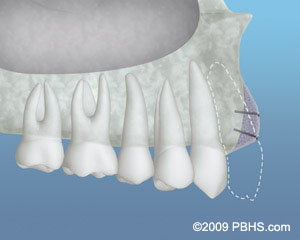
1. Inadequate bone
2. Graft material placed
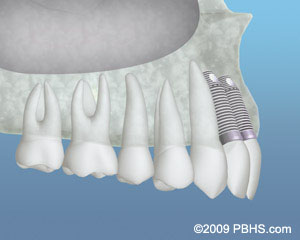
3. Implant placed
Types of Grafting
Socket Preservation: Bone is placed directly into the socket right after a tooth is removed to maintain the natural contour of the jaw.
Ridge Augmentation: Used when the jawbone has become too narrow or shallow, restoring height and width before implant placement.
Sinus Lift (Sinus Grafting): For upper back teeth, if the sinus floor is too low or bone height is limited, the sinus membrane is gently lifted and bone is added to create adequate space for implants.
What to Expect
Bone grafting is a routine, comfortable office procedure, performed under local anesthesia with optional sedation. Most patients experience only mild soreness afterward. Healing typically takes three to six months, depending on the graft type and your body’s response. Once the graft integrates with your natural bone, the area will be ready for implant placement.